
Capiz State University (CAPSU) continues to strengthen its institutional commitment to meaningful education for sustainable development through University-wide directives and curriculum harmonization initiatives promoting the integration of Indigenous Peoples (IP) Education, Peace Education, Gender and Development (GAD), Climate Change Education, and other sustainability-related concepts into teaching and learning across academic programs.
Under the leadership of University President Dr. Efren L. Linan, CAPSU issued Memo Order Nos. 2026-05-2413 and 2026-06-2675, reinforcing the integration of sustainability principles and the United Nations Sustainable Development Goals (SDGs) into teaching and learning across academic programs.
Grounded in National Policy
The institutional directives support the Commission on Higher Education’s (CHED) initiatives promoting inclusive, culturally responsive, gender-sensitive, and peace-oriented education.
The first memorandum directs the integration of IP Education, Peace Education, and Gender-Fair Language/GAD into course syllabi, while the succeeding memorandum broadens this commitment by explicitly incorporating sustainability principles, Climate Change Education, and social responsibility into teaching and learning across academic programs.
Together, these directives reinforce CAPSU’s commitment to providing relevant, inclusive, and socially responsible education aligned with national educational priorities and the global sustainable development agenda.
Where the Topics Are Taught
The integration of sustainability-related concepts can be supported through General Education courses such as GEE 102 – Gender and Society, The Contemporary World, and Ethics, alongside other relevant courses across academic programs.
Gender and Society provides opportunities to address gender equality, gender-fair language, and social inclusion. The Contemporary World offers opportunities to explore cultural diversity, Indigenous Peoples’ perspectives, global citizenship, and sustainability, while Ethics emphasizes human rights, social responsibility, mutual respect, and peaceful coexistence.
Beyond these courses, the University directives call for the incorporation of relevant sustainability and SDG concepts into course syllabi, learning outcomes, instructional activities, and assessments, as appropriate to the content and objectives of each course.
Reaching Every Student
CAPSU’s institutional commitment extends across academic programs, with the University directing the provision of meaningful education for sustainable development through required courses.
This approach aims to ensure that students, regardless of academic discipline or campus, are provided with opportunities to develop knowledge, skills, and values related to sustainability, cultural diversity, gender equality, peace, environmental responsibility, and active citizenship.
By embedding these concepts into teaching and learning, CAPSU seeks to prepare graduates who are academically competent, socially responsible, and capable of contributing to inclusive and sustainable communities.
Advancing the Sustainable Development Goals
The University’s curriculum integration directives support several interconnected United Nations Sustainable Development Goals, particularly SDG 4 (Quality Education), SDG 5 (Gender Equality), SDG 10 (Reduced Inequalities), SDG 13 (Climate Action), and SDG 16 (Peace, Justice and Strong Institutions).
Central to this commitment is SDG Target 4.7, which emphasizes ensuring that learners acquire the knowledge and skills needed to promote sustainable development, including education for sustainable lifestyles, human rights, gender equality, a culture of peace and nonviolence, global citizenship, and appreciation of cultural diversity.
IP Education contributes to SDG 10 by promoting respect for Indigenous Peoples’ identities, rights, and cultural heritage. GAD integration advances SDG 5 through gender-responsive education, while Climate Change Education supports SDG 13 by encouraging environmental awareness and responsible action. Peace Education reinforces SDG 16 by promoting respect, peaceful coexistence, justice, and inclusive communities.
Through these interconnected learning areas, CAPSU seeks to make sustainability education a meaningful component of students’ academic preparation and civic development.
Monitoring and Curriculum Harmonization
Complementing these institutional directives, CAPSU continues to strengthen curriculum quality and instructional consistency through a University-wide Syllabi and Instructional Materials Harmonization initiative spearheaded by Dr. Hazel Joaquin, Director for Instruction, under the Office of the Vice President for Academic Affairs (VPAA).
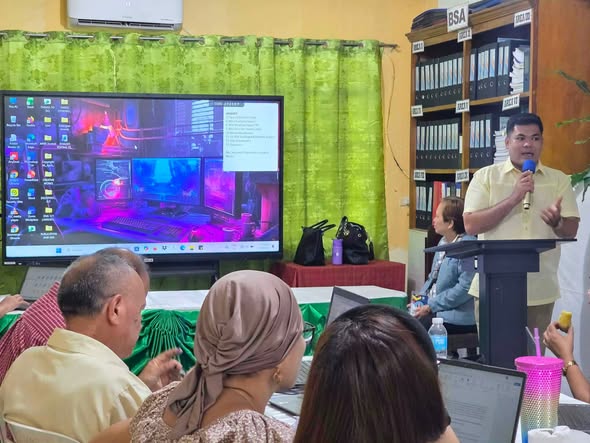
As part of this initiative, a Lecture on the Harmonization of Course Syllabi and Instructional Materials was conducted at CAPSU Tapaz Satellite College on August 5, 2026, in collaboration with the Office of the Publication, Instructional Materials, and Creative Works (PIMC), headed by Dr. Emmanuel D. Dayalo, and Ma. Zoraida Villasis, Quality Assurance Officer.
The activity focused on aligning course outcomes, learning objectives, teaching and learning strategies, assessment methods, and instructional resources with the University’s prescribed curriculum, institutional goals, existing policies, and quality standards.
The undertaking received support from Dr. Ricky Fecara, Satellite College Director of CAPSU Tapaz, and Dr. Remia Garde, Chairperson for Quality Assurance, whose leadership and coordination contributed to the successful conduct of the activity.
Marking the first leg of the University-wide harmonization initiative, the activity reflects CAPSU’s continuing efforts to promote consistent instructional practices, outcomes-based education, and quality assurance across its campuses. It also provides a foundation for aligning course syllabi and instructional materials with institutional curriculum directives, including those concerning sustainability and SDG education.
In accordance with the University memoranda, Deans, Program Chairpersons, and Quality Assurance Chairpersons are tasked with monitoring and documenting the integration of sustainability-related concepts into course syllabi and instructional practices.
Through these complementary institutional efforts, CAPSU reaffirms its commitment to advancing SDG Target 4.7 and the broader Sustainable Development Goals, strengthening its role in delivering quality, inclusive, and meaningful education that prepares graduates to contribute to peaceful, equitable, resilient, and sustainable communities.
#CAPSU# SDG4QualityEducation #education #EducationforSustainableDevelopment #SDGTarget4Point7 #SustainableCAPSU